Patients choose providers the same way they choose everything else now: they search, they compare, and they read reviews before they ever pick up the phone. That makes digital marketing for the healthcare industry less of an option and more of a requirement. The good news is that a handful of fundamentals carry most of the weight. Here are the top five digital marketing strategies for healthcare organizations, from your website and local SEO to email, social media, and video. 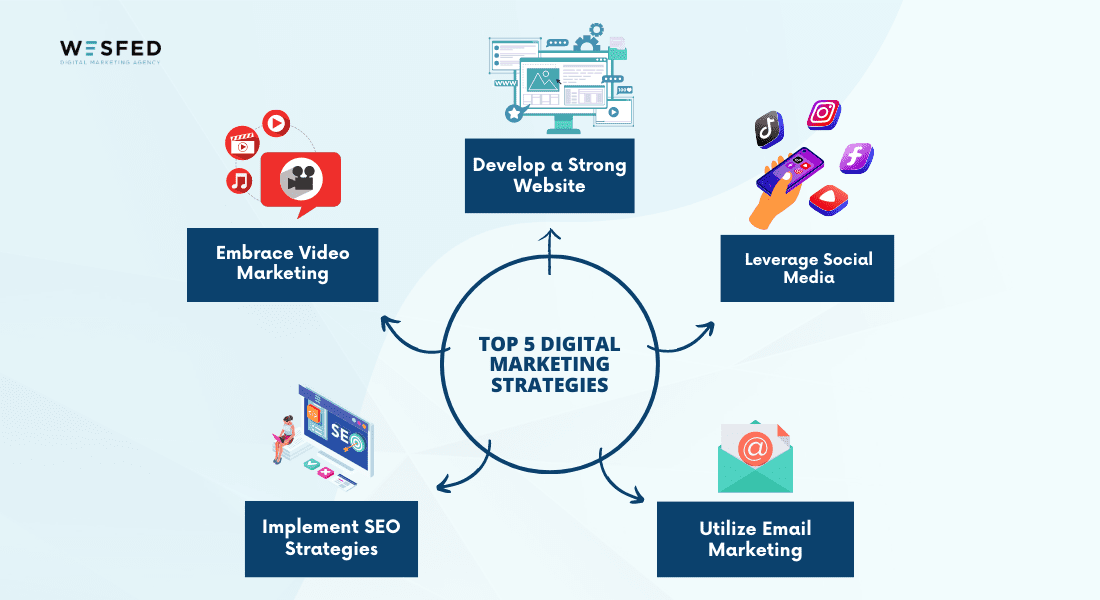
Develop a Strong Website
If you’re a healthcare organization looking to establish a solid online presence, a strong website is the foundation everything else stands on. Most patients turn to the internet for health information and to vet providers, so your website needs to be easy to navigate, visually clean, fast, and optimized for search engines.
The Importance of Responsiveness
When it comes to website design, one of the most important aspects is responsiveness. Patients access information from a variety of devices, from smartphones to tablets and desktops, and most healthcare searches now happen on a phone. A responsive website that adapts to any screen size ensures your content is easy to read and your appointment forms are easy to use, no matter the device.
Why a Clunky Website Costs You Patients
A website that’s clunky and difficult to use is a real pain point for patients, especially when booking appointments online. If a patient cannot find your hours, your location, or a way to schedule within a few seconds, many will simply move on to the next practice in the search results. A clean, fast digital experience is not cosmetic; it directly affects how many patients you win.
Leverage Social Media
Social media has become a standard channel for healthcare providers who want to connect with patients and build a recognizable presence. Platforms like Facebook and Instagram allow healthcare organizations to engage with patients, educate them about health-related topics, and promote their services. If you’re running profiles on several platforms, a good system helps; see our guide on how to manage multiple social media accounts.
Crafting a Winning Content Strategy
If you want social media to produce results, a well-defined content strategy is key. Producing high-quality, accurate content that resonates with your audience builds trust, and trust is the currency of healthcare marketing. Consistent, genuinely helpful content also supports your search rankings and attracts new patients to your website over time.
The Power of Personalization
Quality content can also nurture prospective patients through their decision. By creating content that speaks to where a patient is in their journey, from first symptom searches to choosing a provider, you stay top of mind. Something as simple as a call-to-action at the end of an email update pointing patients to your new blog post keeps the relationship active between visits.
Utilize Email Marketing
Email marketing is a great way for healthcare providers to keep patients in the loop and informed about their services. This cost-effective strategy allows providers to send updates about their organization, upcoming events, and seasonal reminders like flu shot availability.
To keep patients engaged and build loyalty, healthcare providers should focus on delivering relevant and valuable content to their subscribers. Newsletters and announcement emails can inform patients about new services, new providers joining the practice, changes in office hours, and other important updates.
When creating content for email campaigns, keep it educational and genuinely useful. Topics can range from tips on maintaining good health to plain-language explanations of common procedures. One caution specific to healthcare: email lists and messaging must respect patient privacy rules, so keep marketing emails free of anything resembling individual health information.
Implement SEO Strategies
Search engine optimization (SEO) is how healthcare organizations get found by the patients already searching for their services. For most practices, the local side matters most: when someone searches “pediatrician near me” or “urgent care in [your city],” you want to be in that map pack. We cover the specifics in our guide to local SEO for healthcare businesses.
Start by researching the terms potential patients actually use to find providers like you. Tools like Ahrefs can show you the demand and competition around searches like “cardiologist in Phoenix, Arizona” versus “heart doctor near me,” so you can target the phrases patients really type.
Next, optimize your website’s content around those terms: a dedicated page for each service and location, informative copy that answers patient questions, and an FAQ section that handles the questions your front desk hears daily. Those direct, plain-language answers do double duty now, because AI search tools like ChatGPT and Google’s AI Overviews pull from exactly that kind of content when recommending providers. Prioritizing SEO increases your visibility, drives more traffic to your site, and ultimately brings more patients through your door.
Embrace Video Marketing
Video is one of the most effective trust-builders available to healthcare providers. Choosing a provider is personal, and seeing your team and your facility on camera makes patients feel more comfortable before they ever walk in.
There are lots of ways to use video in your healthcare marketing. You could film a tour of your facilities, share patient testimonials (with proper consent), introduce your providers, or create short educational videos about common conditions and procedures. Think about your audience: younger patients respond to short, visually engaging clips on social media, while others prefer longer, more detailed videos with thorough information.
By creating videos that speak to your patients’ real questions and concerns, you showcase your services in an approachable way while building the credibility that healthcare decisions demand. You do not need a production studio; a steady phone camera, good lighting, and a provider who explains things clearly go a long way.
Conclusion
Digital marketing is how healthcare organizations meet patients where they already are: online, searching, and comparing. Nail these five strategies (a strong website, active social media, useful email, healthcare-focused SEO, and honest video) and you build an online presence that attracts new patients and keeps existing ones engaged. Start with the website and local SEO, since that is where patient decisions actually happen, and build out from there.