For a small business, local SEO is the highest-return marketing work you can do. When someone nearby searches for what you sell, they are not browsing. They are ready to call, visit, or buy. Local SEO (search engine optimization focused on your geographic area) is how you make sure your business is the one they find. This guide covers what local SEO is, the benefits of local SEO for small businesses, the components that matter most, and the practical steps to put it to work.
Why You Should Care About Local SEO
The way people find local businesses has changed for good. Word-of-mouth still matters, but the phone book is gone and the first stop is a search: on Google, on Maps, and increasingly in AI tools like ChatGPT and Google’s AI Overviews. Here is why local SEO deserves a place at the top of your marketing list:
- Online Visibility: Nearly everyone carries a smartphone, and “near me” searches are how people choose where to spend money. If your business does not appear in local search results, those customers go to a competitor who does.
- Improved User Experience: Local SEO is not just about showing up in search results. It also pushes you to keep your hours accurate, your site fast, and your information complete, which means potential customers get what they need without friction.
- Conversion Rates: Local searchers convert at a high rate because their intent is immediate. Someone searching “plumber near me” at 7 a.m. has a problem right now. Local SEO puts you in front of people who are ready to act.
- Building Trust and Credibility: Showing up prominently in local results, with a complete profile and strong reviews, signals to customers that your business is established and trustworthy. People trust what Google surfaces first.
Now let’s get specific about what local SEO actually is and how you can use it to grow your business.
1. What Is Local SEO, and Why Is It Crucial for Small Businesses?
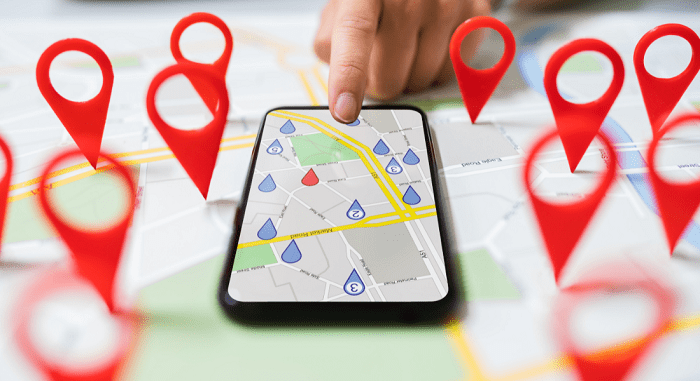
What is local search?
Local search is the process of using a search engine to find products, services, or businesses within a specific geographic area. If someone in your city needs a coffee shop, they search “coffee shops near me” or “coffee shop in [city].” Local SEO is the work of making sure your business shows up in those results, in the map pack, and on Google Maps when that search happens. 
The role of search engines
Google dominates local search, which is why most local SEO work centers on Google Search, Google Maps, and your Google Business Profile. Bing and Apple Maps matter as secondary channels, and AI assistants now pull local business recommendations from much of the same underlying data. When a user searches, Google’s algorithm weighs relevance, distance, and prominence to decide which businesses to show. Your job is to give it every reason to show yours.
Why small businesses need local SEO
Local SEO is the bridge between small businesses and the customers closest to them. Here is why it fits small businesses so well:
- Competing with Big Brands: You cannot outspend a national chain, and you do not have to. Local search results favor proximity and relevance, which means a well-optimized local business can outrank a big brand for searches in its own backyard.
- Connecting with Local Customers: Local SEO puts you in front of people actively searching for what you offer, in the area you serve. These are the highest-intent prospects you will ever reach.
- Cost-Effective Marketing: Billboards, print ads, and radio spots cost money every month whether they work or not. Local SEO is an asset you build. The work compounds, and the visibility keeps producing leads without a per-click bill.
With a strong local SEO strategy in place, your small business can compete effectively in local search and turn that visibility into calls, visits, and revenue. If you want a professional team handling it, that is exactly what our local SEO service does.
2. The Benefits of a Strong Local SEO Strategy
Improved Online Visibility
Local SEO gets your business in front of people at the moment they are searching for what you sell. That means showing up in the map pack, in organic results for local searches, and on Google Maps. More visibility in those placements means more website traffic, more calls, and more customers walking through your door.
Higher Rankings in Search Results
Most searchers never scroll past the first page, and a large share never look past the map pack at the top. Ranking higher is not vanity, it is where the clicks live. Local SEO is the set of activities that earns those positions for the searches that matter to your business.
Targeting the Right Audience
National advertising sprays your message at everyone. Local SEO targets people in your service area with a demonstrated need, right now. When your business ranks for local keywords, the traffic you attract is genuinely interested in your products or services, which means higher conversion rates and less wasted spend.
Boosting Conversion Rates
Local SEO does not stop at traffic. Part of the work is making sure your website loads fast, works on a phone, answers the questions people arrive with, and makes it dead simple to call or request a quote. A well-optimized site turns more of its visitors into customers.
Enhancing User Experience
Everything local SEO asks of you (accurate hours, real photos, fast pages, clear contact info, responses to reviews) also happens to be what customers want. That overlap is not a coincidence: Google rewards businesses that serve searchers well. The result is a better experience for customers and more loyalty over time.
3. Essential Components of Local SEO
Keyword Research and Optimization
Keyword research is the foundation. Identify the actual phrases your customers use: the services you offer, the problems you solve, and the city and neighborhood names they attach to those searches. Then build your pages and content around those terms. A plumber does not need to rank for “plumbing.” They need to rank for “water heater replacement [city].”
On-Page SEO for Local Businesses
On-page SEO means optimizing your website itself: title tags, meta descriptions, headings, and page copy that include your services and location naturally. Every location or service you want to rank for deserves its own substantive page. Keep your name, address, phone number, and hours accurate and easy to find, and add local business schema markup so search engines and AI systems can read your details cleanly.
Optimizing Your Google Business Profile
Your Google Business Profile (formerly Google My Business) is the single most important asset in local SEO. It is what powers your appearance in the map pack and on Google Maps. Claim it, verify it, and fill out every field: categories, services, hours, attributes, photos, and a keyword-aware business description. Then keep it alive with regular posts and photo updates. Reviews live here too, and they pull double duty: they influence rankings and they influence whether a searcher picks you. We cover this in depth in does Google reviews help SEO.
Local Content Creation
Create content that serves your local audience: service pages for each thing you do, answers to the questions customers actually ask, and pages or posts relevant to your area. This does two things. It gives you more chances to rank for local searches, and it establishes your business as the authority in your market. Depth beats volume; one genuinely useful page outperforms ten thin ones.
Citations and Social Profiles
Citations are mentions of your business name, address, and phone number on directories like Yelp, Apple Maps, Bing Places, and industry-specific sites. Consistency matters: conflicting information across the web erodes Google’s confidence in your listing. Active social profiles round out your presence and give customers more ways to verify you are real and engaged. Together, these signals build the prominence side of local rankings.
4. Local SEO Tactics for Small Business Owners
Making Your Business Appear on the First Page of Search Results
Earning a first-page position for your key local searches comes from stacking the fundamentals: a complete and active Google Business Profile, service pages targeting the right keywords, consistent citations, a steady flow of reviews, and links from local sources like chambers of commerce, sponsorships, and local press. No single tactic does it. The stack does.
Reviews as a Ranking and Conversion Tactic
Reviews are one of the strongest local ranking signals, and they are also the first thing a potential customer reads. Build a simple, repeatable ask into your process: after a completed job or sale, send the customer a direct link to your review form. Respond to every review, positive and negative. A thoughtful response to a bad review often earns more trust than a dozen five-star ratings.
The Importance of Search Engine Optimization in Digital Marketing
Local SEO does not operate in a vacuum. It anchors the rest of your digital marketing: your ads land better when your organic presence backs them up, your social profiles funnel people to a site that converts, and your email list grows from search traffic. SEO is the foundation the other channels stand on.
Why Trust and Credibility Matter
Customers cross-check. They find you in the map pack, skim your reviews, glance at your website, and maybe ask an AI assistant for a comparison. Every touchpoint either builds or leaks trust. Local SEO work, done right, makes every one of those checks come back positive.
Do Small Businesses Need to Invest in SEO?
Yes, and the honest framing is time versus money. You can do much of this yourself if you have the hours and the patience; the fundamentals are learnable. Or you can pay a professional and spend your hours running the business. Either way, the businesses that invest consistently in local SEO pull ahead of the ones that treat it as a one-time setup, because rankings reflect ongoing activity, not past effort.
5. Practical Steps to Improve Your Local SEO
Creating and Optimizing Business Profiles
Start with the audit: is your Google Business Profile claimed, verified, and complete? Are your name, address, phone number, and hours identical across your website, Google, Apple Maps, Bing Places, Yelp, and your social profiles? Fix inconsistencies first. They are cheap to correct and expensive to ignore.
Build Location Signals Into Your Website
Use your city and service-area names naturally in titles, headings, and page copy. Create a dedicated page for each core service. Make sure your site works flawlessly on a phone, because the majority of local searches happen on one. Add your business information to the footer of every page.
How to Rank Higher in Search Engines
Ranking higher is a compounding routine, not a trick: publish genuinely useful content, keep your profile active with posts and photos, collect reviews steadily, earn local links, and monitor your results monthly so you know what is working. For a full breakdown of what Google weighs, see our guide to the ranking factors of local SEO.
Driving More Customers to Your Business
Visibility is step one; conversion is step two. Answer the questions searchers arrive with, put your phone number and a contact form where nobody has to hunt for them, respond to reviews and Q&A on your profile, and show up in your community. Local SEO works best for businesses that are genuinely engaged locally, because that engagement produces the mentions, links, and reviews that rankings are made of.
SEO Tactics That Work for Small Businesses
If you are prioritizing with limited time, work this order: Google Business Profile first, website basics second, reviews third, citations fourth, content fifth. That order roughly matches impact for most local businesses. Everything after that is refinement.
6. Local SEO as a Cost-Effective Marketing Strategy
Reaping the Benefits of SEO Without Breaking the Bank
Compare the economics. Paid ads stop producing the moment you stop paying. Traditional media charges you to reach thousands of people who will never need what you sell. Local SEO focuses your effort on people in your area actively looking for your offer, and the asset you build keeps working month after month. For most small businesses, no other channel matches that efficiency.
Why Local SEO Is Crucial for Small Businesses
Local SEO levels the field. In local results, Google cares about relevance, proximity, and prominence in your market, not the size of your national ad budget. A small business that does the work can and does outrank billion-dollar brands for searches in its own service area. That is an opening no other marketing channel gives you.
Proven Marketing Strategies for Small Businesses
Local SEO is not a trend to test; it is infrastructure. Search behavior has only deepened as phones, maps, and now AI assistants mediate more buying decisions. The businesses that built their local presence years ago are collecting the compounding returns today. The second-best time to start is now.
The Power of Local SEO Tactics
None of these tactics is glamorous. Complete profiles, consistent citations, steady reviews, useful pages. But stacked together and maintained, they change a business’s trajectory: more calls, better-qualified leads, and a durable advantage over competitors who never got organized.
7. The Future of Local SEO: AI Search Is Here
AI Overviews and AI Assistants Are Changing Local Discovery
The biggest shift in local search is already underway. Google’s AI Overviews answer many searches directly on the results page, and tools like ChatGPT and Perplexity now recommend local businesses by name. These systems draw on the same signals as classic local SEO: your Google Business Profile, your reviews, your citations, and the clarity of your website. The playbook has not been replaced, but the stakes have gone up, because AI answers surface fewer businesses than a traditional results page did.
How Small Businesses Can Adapt
The businesses that AI systems recommend are the ones with clean, consistent, machine-readable information and strong reputations. Practically, that means: keep your profile data complete and current everywhere, use schema markup on your site, write pages that answer questions directly and plainly, and build a review base that gives AI models evidence you are good at what you do. This work also has a name now: answer engine optimization, or AEO.
Voice and Zero-Click Search
Voice assistants and zero-click results reward the same fundamentals: direct answers, accurate structured data, and a strong profile. If your hours, services, and location are unambiguous everywhere they appear, you win these placements by default while sloppier competitors get skipped.
Preparing for the Future
You do not need to predict every algorithm change. You need to be the business whose information is accurate everywhere, whose reviews are strong and recent, and whose website genuinely answers what customers ask. That business wins in classic search, wins in maps, and wins in AI answers. Staying consistent is the whole strategy.
8. Starting a New Business? Build Local SEO In From Day One
Local SEO for New Ventures
If you are launching a business, local SEO is cheapest and easiest at the start. Claim your Google Business Profile the week you open. Choose a business name and website structure with search in mind. Set up your citations once, correctly, instead of untangling inconsistencies later. A new restaurant, trade service, or shop that launches with its local presence in order starts earning search traffic while competitors are still invisible.
Using Local SEO to Attract Your First Customers
New businesses have no word-of-mouth yet, which makes local search disproportionately valuable early on. Your first wave of customers will find you by searching, and their reviews become the social proof that attracts the next wave. Prioritize asking those early customers for reviews; ten genuine reviews in your first few months changes how both Google and people see you.
Your Website’s Role in Local Visibility
Your website is the one online asset you fully control. Google Business Profile gets the map visibility, but your website is where searchers verify you, compare you, and contact you. Make it fast, mobile-friendly, and specific about what you do and where you do it. A thin one-page site caps how far the rest of your local SEO can take you.
9. A Word on AI-Generated Content
The Potential Pitfalls of Using AI Content for SEO
AI writing tools are everywhere, and used carelessly they produce the same generic article as everyone else’s AI tool. Google’s guidance is consistent: it rewards helpful, reliable content and demotes content produced primarily to manipulate rankings, however it was made. Publishing unedited AI text at volume is a strategy with a short shelf life.
Human vs. AI Content Creation
The useful division of labor: AI is good at outlines, drafts, and reformatting; you are good at experience, specifics, and judgment. Your content stands out when it includes what only you know: real project photos, actual prices, local details, and opinions earned from doing the work. That is also exactly what AI answer engines look for when deciding whom to cite.
Balancing Automation with Authenticity
Use AI to move faster, not to replace thinking. Draft with it if you like, then rewrite in your own voice, verify every claim, and add the specifics only your business can provide. Content that helps a real customer make a decision will rank; content that exists to fill a page will not.
FAQ
What is local SEO for a small business?
Local SEO is the work of making your business visible when people in your area search for what you offer: optimizing your Google Business Profile, your website, your reviews, and your directory listings so you appear in the map pack, local organic results, and increasingly in AI-generated answers.
What are the main benefits of local SEO for small businesses?
More visibility with nearby customers at the moment they are ready to buy, higher conversion rates than almost any other channel, credibility from strong rankings and reviews, and marketing costs that build a lasting asset instead of renting temporary attention.
How long does local SEO take to work?
Expect early movement within a couple of months for less competitive searches, and meaningful results in roughly three to six months of consistent work. Timelines vary with your market, your competition, and your starting point. Anyone promising overnight rankings is selling something else.
Can I do local SEO myself?
Yes. Claiming your Google Business Profile, fixing your citations, asking for reviews, and improving your website are all learnable. The tradeoff is time and consistency. Many owners handle the basics themselves and bring in a local SEO professional when they want faster progress or a competitive market cracked.
10. Conclusion: Harness the Power of Local SEO for Your Small Business
Local SEO is the most direct line between a small business and the customers searching for it. Done consistently, it delivers:
- Improved online visibility where buying decisions happen
- Higher rankings in search, maps, and AI answers
- Traffic made of the right audience: local and ready to act
- Better conversion rates from a stronger website and profile
- Trust and credibility that compound over time
It is cost-effective, it is proven, and it is more important now than ever as AI reshapes how people find local businesses. Whether you are launching something new or growing an established operation, put local SEO at the top of your marketing plan. Do the work, keep it consistent, and your market will find you.